Words at the Table
The Silence After the First Bite
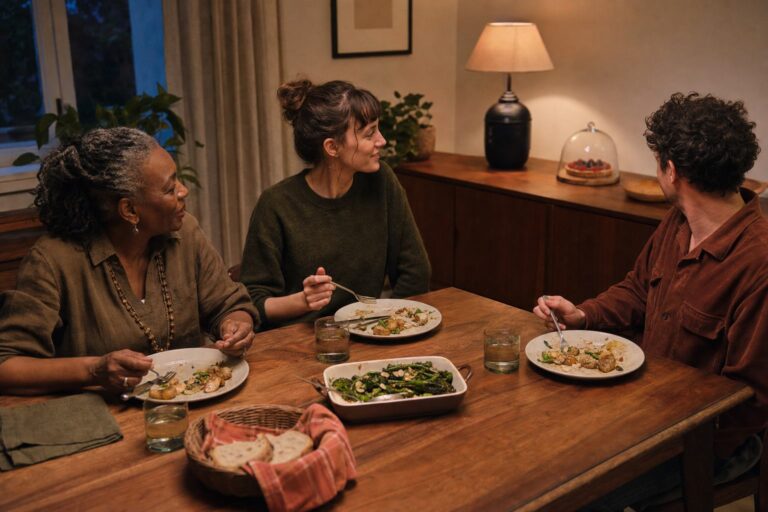
The first quiet seconds after a dish is tasted can hold concentration, pleasure, uncertainty or disappointment. Reading them well requires patience, not guesswork.
Eating Together journal
Essays and observations about hospitality, shared meals, traditions, menus, conversation, memory and belonging.
The first quiet seconds after a dish is tasted can hold concentration, pleasure, uncertainty or disappointment. Reading them well requires patience, not guesswork.
Two people can share a meal, a view and an unhurried silence without withdrawing from one another. Closeness is sometimes carried by rhythm rather than talk.
“This is how we make it” can pass on a standard, a memory or a hard-won skill. It can also decide whose questions and improvements a kitchen is prepared to hear.
The food served to guests may be richer, rarer or more laborious than the household’s everyday meals. That generosity expresses honour while quietly redistributing cost and work.
A host’s refusal of help may protect welcome, competence, privacy or control—but it can also keep hospitality unequal and the host outside the gathering.
“Save room” does more than announce dessert. It places a future dish inside the present meal, changing how people choose, pace themselves and imagine the ending.
A communal fast coordinates bodies, clocks and attention before any food is shared. Its solidarity depends on care, exemptions and what the waiting asks people to notice.
Knowledge offered without condescension can make unfamiliar food accessible while preserving surprise and choice.
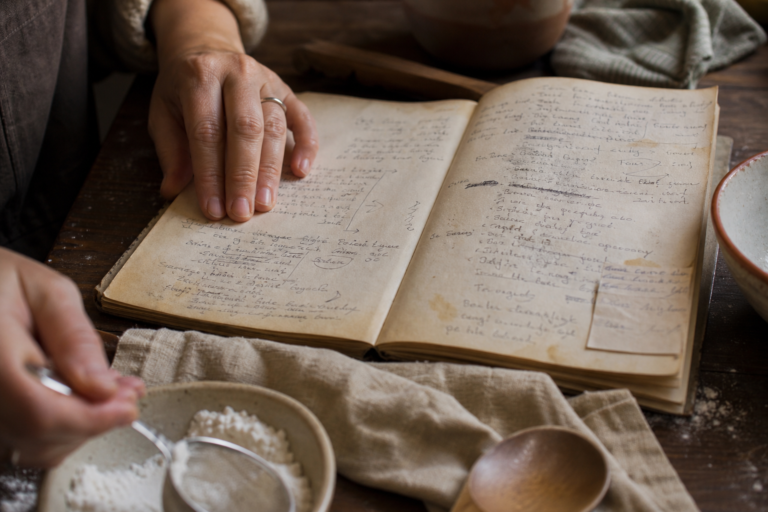
Corrections, substitutions and names in the margins reveal the lives through which a recipe has travelled.
A service script can protect accuracy and fairness, but hospitality weakens when the sequence becomes more important than the person sitting at the table.